
CNC machining
CNC machining automation starts with a clear project brief
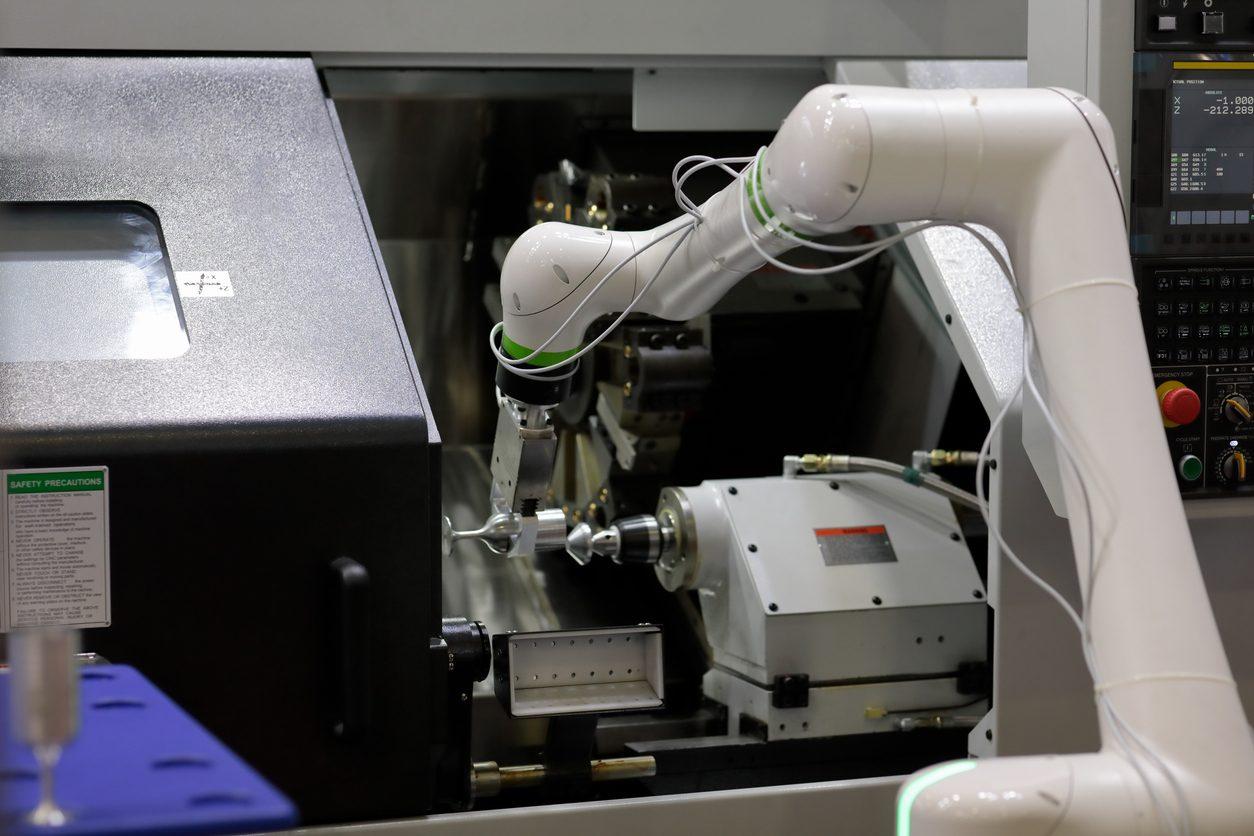
Robotic machine tending means a robot or cobot loads blanks into the CNC machine and unloads finished parts. Whether it pays off depends on the parts, batch sizes, workholding and programming — not on the robot alone. RoboConnect helps you clarify this before you contact suppliers.
Free and without obligation for industrial companies during the introductory period.
The challenge
Time is lost at the machine and in the flow around it
A CNC machine only produces when it has a program, a clamped workpiece and someone to load it. When loading and changeovers are done by hand, the machine can sit idle during breaks, shift changes and after hours. It is not always clear whether your batch sizes justify automation.
Machine time lost waiting for loading, unloading or changeovers
New parts that take a long time to program, especially with many variants
Material and parts moved and handled many times between stores, machines, outside finishing and finished goods
The whole cell
The robot is only one part of machine tending
A robot at the CNC machine has to work with the machine, the workholding, the programs and the material flow around it. Sometimes the biggest gain lies in how material and parts move between stores, machines and further processing. There, better organization and a simpler flow can be a better first step than a robot.
Workholding, pallets and part families
Grippers and workholding must hold parts securely and consistently every time. In some solutions the robot moves pallets or vises (vices) with pre-clamped workpieces instead of the part itself. A new part then does not need a new gripper.
Programming and machine integration
Every new part has to be programmed and checked before it runs. With many variants, programming can take more time than the machine tending itself. The robot also has to communicate with the machine about doors, clamping and program start.
Safety and risk assessment
A collaborative robot (cobot) also requires a risk assessment of the whole application: tooling, machine, surroundings and every task from setup to maintenance.
How RoboConnect helps
Get the project ready before you contact suppliers
RoboConnect helps you describe your machines, parts and production in a structured way, so the project is easier to assess — for you, and for the suppliers you talk to.
- 01Structure needs, machines, part families, batch sizes, programming and constraints before you go to the market
- 02Make the project easier to understand, assess and compare for relevant actors
- 03Identify system integrators, technology suppliers or R&D actors that are relevant to your project
The needs clarification
What a needs clarification for CNC automation should cover
A thorough needs clarification makes it easier to judge whether robotic machine tending fits, and what has to be in place for the cell to work in daily production.
- Machines, controls and current workholding
- Part families, materials, sizes and weights
- Batch sizes, changeovers and the unattended running you want
- How new parts are programmed today: CAM, simulation, 3D model or drawing
- Material flow into and out of the cell and on to stores, outside finishing and packing
- Tolerances, inspection, space, safety and who will run the cell
When does robotic machine tending fit well?
- When you have recurring jobs or part families with similar handling and workholding
- When parts can be clamped outside the machine on standard pallets or vises
- When machines stand idle because nobody has time to load them, for example in the evening and at night
When do you need to be extra thorough?
- You have small batches, many variants or frequent changeovers
- Parts are large, heavy, irregular or need special workholding
- Programming new parts already takes more time than machining them
Questions and answers
Frequently asked questions about CNC machining automation
What is robotic machine tending?
Machine tending means a robot or cobot loads raw material or blanks into a machine, such as a CNC mill or lathe, and unloads finished parts. The robot can also handle blow-off, deburring or inspection between operations. The aim is better machine utilization and less manual, repetitive work.
Cobot or industrial robot at the CNC machine?
Both cobots and traditional industrial robots come with a range of payloads, reaches and speeds. The choice should rest on the application: payload, reach, cycle time, precision, work envelope and risk assessment. A cobot is designed to work near people, but it is not automatically safe without safeguarding. The whole application, including gripper, workpieces and machine, must be risk-assessed.
Can we automate CNC machines with small batches?
Yes, but it needs a more thorough clarification. Small batches mean more changeovers, and new parts may need new grippers, workholding and programs. Two things help: grouping parts into families with similar handling, and letting the robot move pallets or vises with pre-clamped workpieces instead of the parts themselves. The needs clarification should describe batch sizes, variants and how often you change over.
Why does programming new parts take so long?
Each new part needs toolpaths in the CAM software. The program has to be checked against the drawing and tolerances, and it can be simulated before it runs. With many variants this becomes a large share of the time. Templates and reuse of proven machining strategies can shorten programming, but choosing strategies, tools and workholding still takes skilled people.
Do we need to know which robot or supplier we want?
No. The needs clarification starts with your machines, parts and production, not with a particular robot. Once the project is clarified well enough, RoboConnect can help identify system integrators, technology suppliers or R&D actors that are relevant to the project. You decide who you want to talk to.
What does it cost to use RoboConnect?
For industrial companies, RoboConnect is free during the introductory period — from registration and needs clarification to matching and supplier dialogue.
Read more
Related pages
- Robot weldingWhat to clarify about process, fixturing and quality before robot welding.
- For industrial companiesHow industrial companies use RoboConnect, from needs to relevant actors.
- PricingFree for industrial companies during the introductory period.
- Questions from industrial companiesAnswers about the process, sharing information and choosing actors.
Get a better basis before you contact suppliers
With a clear project brief it becomes easier to assess solutions for machine tending and workholding, compare input and enter into dialogue with actors that are relevant to your project.