
Plastics and composites
Plastics and composites automation starts with a clear project brief
In plastics manufacturing, much of the manual work can lie around the process itself: part removal and finishing after injection molding (moulding), cutting, stacking and packing in extrusion, or trimming and punching after thermoforming. In composites manufacturing, layup, curing and machining are separate processes with their own requirements. RoboConnect helps you clarify which operations suit automation before you contact suppliers.
Free and without obligation for industrial companies during the introductory period.
The challenge
The bottleneck can lie in the operations around the process
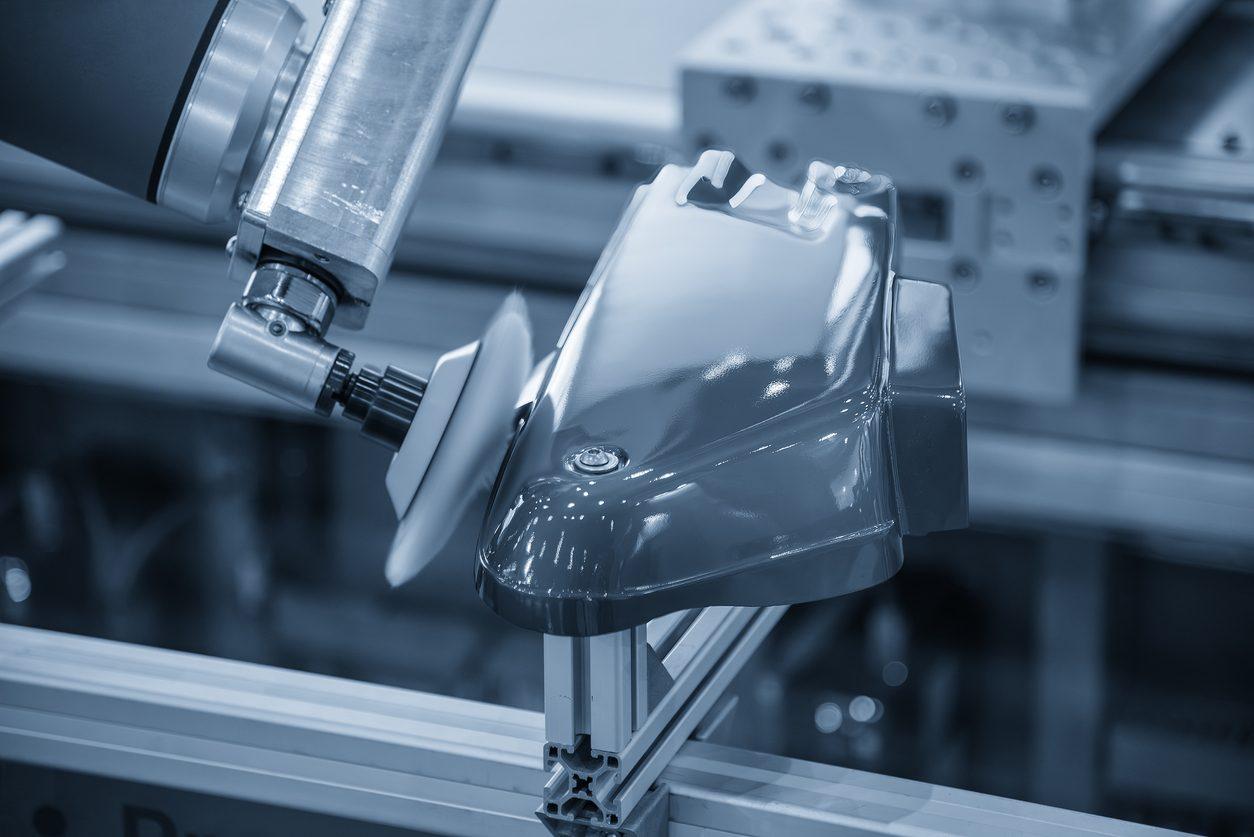
The molding machine or extrusion line can run at a steady pace while parts are cut, deburred, sanded, inspected and packed by hand afterwards. Sanding can be dusty work with a lot of vibration, and the result can depend on who does it. When demand grows, the machine is not necessarily what sets the limit.
Finishing such as sanding, deburring, trimming and cutting that ties up several people
Low volumes and many variants that make it unclear what can be automated
A need for more capacity without more people to put on the job
The whole solution
One operation can be automated without changing the whole line
Automation after molding can start with one defined operation, such as a sanding, trimming or packing cell, without changing the molding machine or the line. The solution still has to fit the part, the material and the variation you have.
Gripping and material handling
Molded and formed plastic parts can be warm and change shape as they cool. Grippers and handling must suit the part, and many variants call for quick changeovers.
Deburring, trimming and sanding
The result depends on tools, force, speed and part-to-part variation. A robotic cell can use force control to handle the variation, and one cell can combine several steps, for example coarse and fine sanding.
Safety and working environment
The whole application must be risk-assessed, also when a cobot is used. Well-defined automation can at the same time remove heavy, dusty and repetitive tasks.
How RoboConnect helps
Get the project ready before you contact suppliers
RoboConnect helps you describe your products, processes and production in a structured way, so the project is easier to assess — for you, and for the suppliers you talk to.
- 01Structure needs, processes, materials, variants and finishing before you go to the market
- 02Make the project easier to understand, assess and compare for relevant actors
- 03Identify system integrators, technology suppliers or R&D actors that are relevant to your project
The needs clarification
What a needs clarification in plastics and composites manufacturing should cover
A thorough needs clarification makes it easier to judge which operations suit automation, and what has to be in place for the solution to work in daily production.
- Process: injection molding, extrusion or thermoforming — or for composites: layup, curing and machining
- Materials, part sizes, weights and surface requirements
- Volumes, batch sizes, variants and mold changes
- Each manual operation after molding, and how many hours and people it takes
- Cycle times and current bottlenecks
- Space, safety, working environment and who will run the solution
When does automation fit well?
- When one operation after molding ties up several people
- When you have repetitive part removal, cutting, deburring or packing at the same machine or line
- When heavy, dusty or monotonous tasks are hard to staff
When do you need to be extra thorough?
- You have many variants, short runs or frequent mold changes
- An earlier automation attempt did not result in a working solution
- The material is flexible, tacky or variable, as in composite layup
Questions and answers
Frequently asked questions about plastics and composites automation
What can be automated after injection molding?
Robots can remove parts and sprues, deburr or deflash, trim, sand, inspect and pack or palletize. Part removal can be handled by sprue pickers, linear (Cartesian) robots, six-axis robots or cobots. Finishing can be automated in a separate cell, either at the machine or elsewhere in production.
Should we automate deburring, or reduce the flash?
Both can be right. Flash and gate remains can come from the mold or the process settings, and better molds or adjusted settings can then reduce finishing before you invest in a robot. The needs clarification should therefore describe why finishing is needed, not just how long it takes.
Does a robot at the injection molding machine pay off with many variants?
It can, but it needs a more thorough clarification. Frequent mold changes and many variants place demands on gripper changes, programming and changeover time. The needs clarification should therefore describe variants, batch sizes and how often you change molds before you assess solutions.
How can composites manufacturing be automated?
Composites manufacturing involves different processes from plastic molding: laying up fabric or prepreg in the mold, curing and machining. Automated tape laying and automated fiber placement (ATL and AFP) are mainly used for large aerospace structures, where material volume justifies the investment. If you make many different parts in small numbers, starting with the operations around them — cutting, trimming, sanding and handling — may be more realistic.
Do we need to know which robot or supplier we want?
No. The needs clarification starts with your products, processes and production, not with a particular robot. Once the project is clarified well enough, RoboConnect can help identify system integrators, technology suppliers or R&D actors that are relevant to the project. You decide who you want to talk to.
What does it cost to use RoboConnect?
For industrial companies, RoboConnect is free during the introductory period — from registration and needs clarification to matching and supplier dialogue.
Read more
Related pages
- Robot weldingWhat to clarify about process, fixturing and quality before robot welding.
- CNC machining automationWhat to clarify about machine tending, workholding and programming before CNC automation.
- For industrial companiesHow industrial companies use RoboConnect, from needs to relevant actors.
- PricingFree for industrial companies during the introductory period.
- Questions from industrial companiesAnswers about the process, sharing information and choosing actors.
Get a better basis before you contact suppliers
With a clear project brief it becomes easier to assess which operations before and after molding should be automated, compare input and enter into dialogue with actors that are relevant to your project.